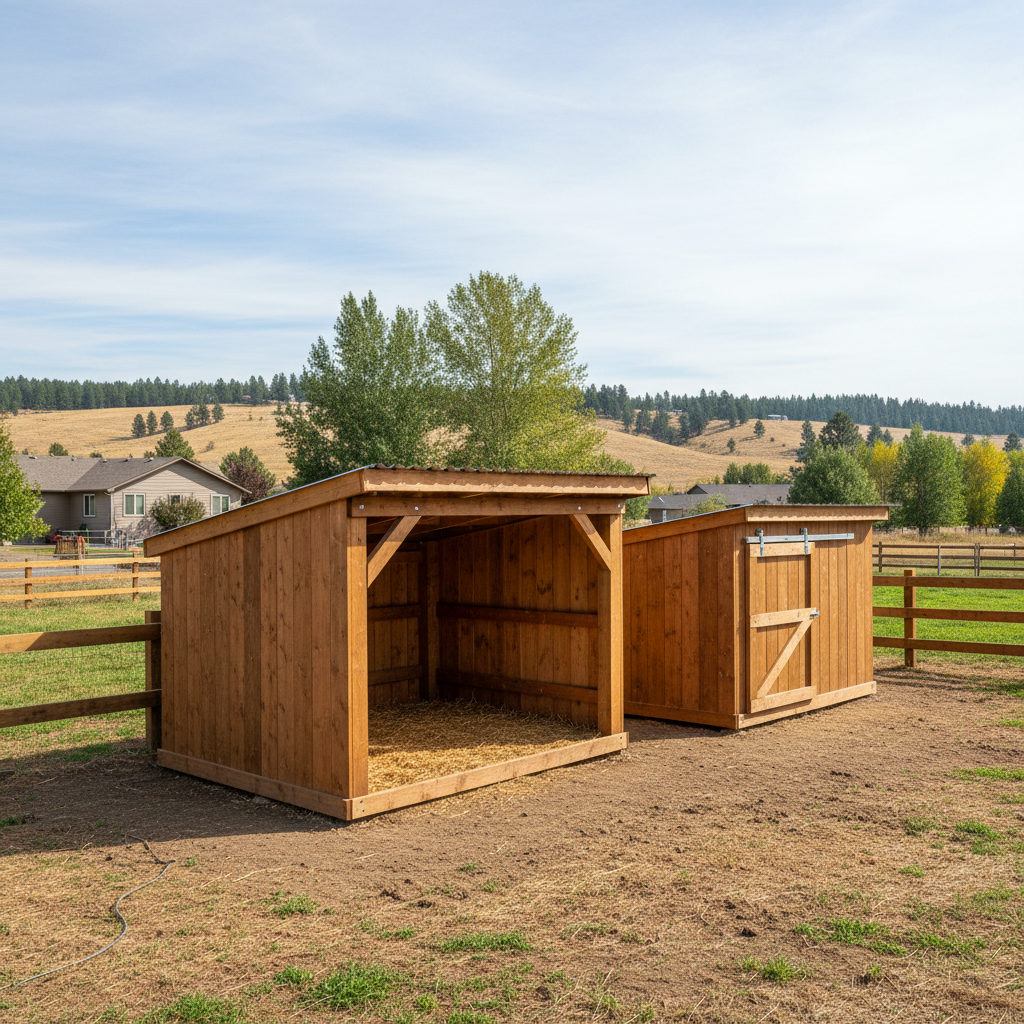
Got animals? Then you know they need good shelter, especially with our Spokane winters. Whether you're running a small hobby farm or have a few horses out in the Valley, a solid livestock shelter isn't just a nice-to-have; it's essential for their health and, let's be honest, your own peace of mind. But what's it actually going to cost you?
What Makes a Livestock Shelter Cost More or Less?
It's not as simple as picking a size off a price list, is it? There are a bunch of factors that push the price up or down. You've got to think about the basics first:
- Size and Design: This is the big one. A small, open-sided run-in shed for a couple of goats will be a lot cheaper than a fully enclosed barn with stalls for horses. Are you looking for a simple three-sided structure? Or do you need something with multiple bays, a tack room, or even a small feed storage area? The more complex the design, the more materials and labor it'll need.
- Materials: What's it made of? Treated lumber, metal siding, asphalt shingles, a concrete slab, or just a dirt floor? Each choice has a different price tag and different durability. For instance, metal roofing might cost a bit more upfront than asphalt, but it'll last a lot longer — especially with our heavy snow loads some years.
- Foundation: A simple gravel pad is cheaper than a concrete slab. But a concrete slab offers better protection from pests and moisture, plus it's easier to clean. What's right for your animals and your property?
- Site Prep: People often overlook this one. Is your site level? Do we need to clear brush, remove old structures, or bring in fill dirt? If your property has a significant slope or rocky soil, like some of the areas north of town, you're going to have higher site prep costs.
- Features & Add-ons: Think about things like gates, interior partitions, windows, ventilation, electrical wiring for lights or heaters, water lines, or even a dedicated wash stall. Every extra feature adds to the final bill.
- Permits: Depending on the size and location of your shelter, you might need permits from Spokane County or the City of Spokane. We can help you figure that out, but permit fees are an additional cost you need to factor in.
Typical Cost Ranges for Livestock Shelters in Spokane
Okay, let's get down to some numbers. Remember, these are rough estimates, and every project is unique. But this should give you a decent ballpark:
- Basic Run-In Shed (10x12 to 12x24, open front): For something simple, three-sided, with a dirt or gravel floor, you're probably looking at anywhere from $3,500 to $8,000. This gets you a sturdy, functional shelter, not just a flimsy kit. Good for a couple of sheep, goats, or a mini horse.
- Medium-Sized Multi-Purpose Shelter (12x24 to 16x36, partially enclosed, maybe a stall): If you need a bit more space — maybe one or two stalls, or a small storage area — with a gravel or partial concrete floor, you're likely in the $8,000 to $18,000 range. This could be great for a couple of horses or a small herd of cattle.
- Larger Barn-Style Shelter (16x36+, multiple stalls, tack room, concrete floor): When you're talking about a more substantial structure, fully enclosed, with multiple stalls, a dedicated tack or feed room, and a full concrete slab, the costs can jump. Expect to pay anywhere from $18,000 to $40,000+. These are often custom-designed for specific needs.
These prices include materials and labor for a quality build that'll stand up to our weather, from those hot, dry summers to the cold, snowy winters. They don't usually include extensive electrical or plumbing hookups unless specified, by the way.
What Should a Good Quote Include?
When you get a quote from us or any other builder, make sure it's detailed. You don't want surprises. A good quote should clearly lay out:
- Detailed Description of the Structure: Dimensions, number of walls, roof style, type of siding, roofing material, and foundation.
- Materials Breakdown: What kind of lumber, fasteners, hardware, etc., will be used.
- Labor Costs: Clearly separate from materials.
- Site Preparation: What's included (e.g., leveling, gravel delivery) and what's not.
- Permit Responsibility: Who is handling the permits and what the estimated fees are.
- Timeline: Estimated start and completion dates.
- Warranty Information: What's covered and for how long.
- Payment Schedule: How payments will be structured throughout the project.
At Spokane Custom Shed Builders, we make sure our quotes are transparent so you know exactly what you're paying for.
How to Avoid Overpaying for Your Livestock Shelter
Nobody wants to throw money away. Here's how you can be smart about your investment:
- Define Your Needs Clearly: Before you even talk to a builder, know exactly what you need the shelter for. How many animals? What size? What functions? Don't overbuild if you don't need to.
- Get Multiple Quotes: Always get at least three detailed quotes from different reputable builders. This helps you compare not just prices, but also what's included and the quality of materials.
- Ask About Material Options: Sometimes a slightly different material choice can save you a good chunk of change without sacrificing too much durability.
- Consider DIY for Non-Structural Elements: If you're handy, maybe you can handle some of the interior finishing, painting, or installing feeders yourself after the main structure is up.
- Check References and Portfolios: Make sure the builder has experience with livestock shelters specifically. Ask for pictures of past projects and talk to previous clients.
- Understand the Contract: Read every word. If something isn't clear, ask. Don't sign anything you don't fully understand.
Building a good home for your animals is a big investment, but it's one that pays off in their health and your peace of mind. Do your homework, ask the right questions, and you'll get a shelter that serves you well for years to come.